Guide
Jenn Air vs Wolf: Picking a Range, Oven or Cooktop
A fair Jenn Air vs Wolf comparison of burner output, oven design, build, common repairs, warranty checks and parts support for kitchens around Alpine, NJ.
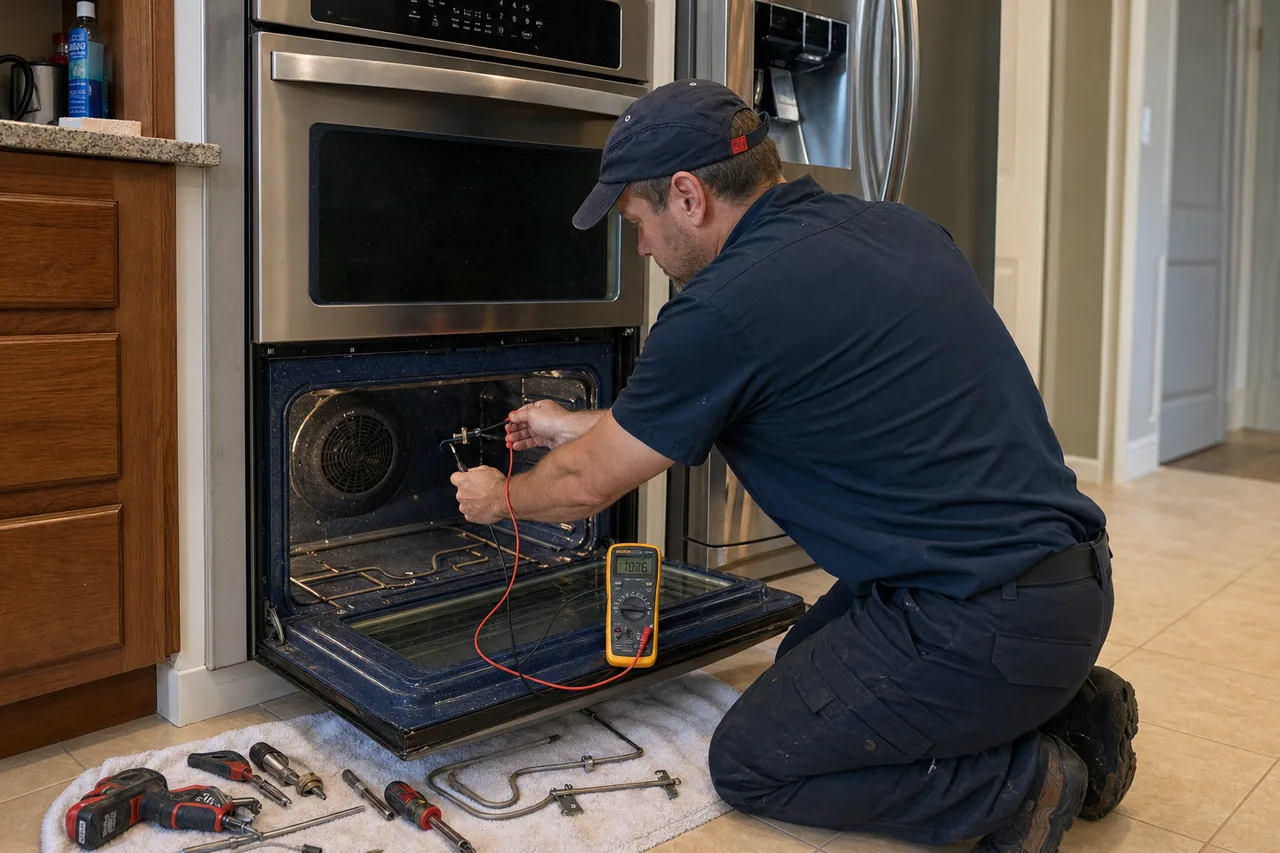
Jenn Air vs Wolf comes down to focus: Wolf builds cooking appliances only, with front burners rated at 18,000 to 20,000 Btu on its dual fuel ranges, while JennAir sells a full matched kitchen, from ranges and wall ovens to refrigerators and dishwashers, usually at a lower price point. Choose Wolf if burner power, heavy pro-style construction and simple knob controls matter most; choose JennAir if one consistent design across every appliance and more touchscreen features matter more.
Neither is a bad buy. The real differences show up in how each one cooks, which parts wear, and how you get parts and service later. Here is a fair side-by-side from the repair side of the kitchen.
How do JennAir and Wolf differ at a glance?
| Factor | Wolf | JennAir |
|---|---|---|
| What the brand makes | Cooking only: ranges, rangetops, cooktops, wall, steam and convection ovens | Cooking plus refrigerators and dishwashers |
| Matching refrigeration | Comes from Sub-Zero, its sister brand | Sold under the JennAir name |
| Published burner output | Up to 20,000 Btu on dual fuel ranges and rangetops | Varies by model; read the spec sheet |
| Controls on gas models | Mostly physical knobs | More touch panels and connected features |
| Long-standing signature | Pro-style ranges with dual-stacked sealed burners | Downdraft ventilation built into some cooktops and ranges |
| Warranty starting point | Read the papers that came with the unit | Limited warranty typically about a year from purchase, varies by appliance |
Which brand puts out more burner heat?
Wolf publishes its numbers plainly. On a Wolf dual fuel range, the front left burner is rated at 20,000 Btu, the other front burners at 18,000 Btu, the rear left burner at 9,200 Btu and the remaining rear burners at 15,000 Btu. Wolf sealed burner rangetops use the same layout. The 36-inch contemporary gas cooktop carries a 20,000 Btu large burner, while the compact 15-inch gas cooktop pairs a 12,000 Btu medium burner with a 9,200 Btu small burner.
Wolf’s dual-stacked burners split the flame into an upper and lower tier, so one burner can sear hard and then hold a gentle simmer.
JennAir gas ranges and cooktops also offer a high-output burner and a low simmer setting, but ratings change with width and model, so compare the spec sheet for the exact unit. In daily cooking, the gap shows up mostly in hard sears, wok work and how fast a big pot boils. If you are leaning toward induction, which both brands sell, Btu stops mattering and control feel and zone size take over.
How do the ovens compare for everyday baking?
Wolf GR gas ranges with 30- or 36-inch ovens use a 30,000 Btu bake burner and an 18,000 Btu broil burner, while the narrow 18-inch oven has an 18,000 Btu bake burner only. LP models keep the same Btu output, which matters if your house runs on a propane tank instead of a natural gas line.
Many buyers of either brand settle on a dual fuel range: a gas top for quick heat control and an electric oven that holds a steadier baking temperature. Both brands sell convection wall ovens, and Wolf adds convection steam ovens. JennAir leans harder on large touchscreens and app connectivity, which is convenient, but every screen and sensor is one more electronic part that can need service.
Which one holds up better over the years?
Reliability depends more on the appliance type and how it is used than on the badge. A few patterns hold for both brands:
- Gas burners: spark igniters crack, spark modules weaken, and boil-overs clog ports or leave moisture under the caps.
- Ovens: bake and broil elements, gas igniters and temperature sensors wear out over time.
- Electronics: the more a range or oven relies on touch controls, the larger the share of repairs that involve control boards.
- Self-clean cycles: the high heat stresses door gaskets, door locks and nearby electronics on any brand.
Wolf ranges are heavy, all-metal units with cast-iron grates, and owners commonly repair rather than replace them. JennAir’s sleeker models trade some of that bulk for glass and electronics. Prompt spill cleanup and seated burner caps help either brand more than the choice between them.
What tends to need repair, and what does it cost?
| Symptom | Likely cause | What the owner can check | When to call a technician |
|---|---|---|---|
| Burner clicks but will not light | Wet or clogged burner, worn igniter or spark module | Dry the cap and base, reseat the cap, clear ports with a pin | Still failing after a full dry-out: typical $300–$650 |
| Oven slow to heat | Weak gas igniter or failed bake element | Watch whether the element glows or the igniter lights | Typical $250–$500 |
| Oven runs far hot or cold | Temperature sensor or thermostat | Compare with an oven thermometer at 350°F | Off by more than about 25°F: typical $280–$450 |
| Blank display or dead touch keys | Control board or electronics | Turn the breaker off for one minute, then back on | Still dead: typical $400–$850 |
| Heat escaping at the door | Worn or torn door gasket | Look for flattened or torn sections | Typical $150–$450 |
| One cooktop burner or zone dead | Burner, element or control fault | Test another pan; check the breaker on electric units | Typical $200–$750 |
These are typical ranges; a diagnostic visit typically runs $95–$149, credited toward the repair if you go ahead, and the firm quote is given on site after diagnosis. See our repair pricing page for more.
How do warranty, parts and service compare?
JennAir’s help center says its appliance limited warranty typically lasts a year from the date of purchase, depending on the appliance type, so check your model’s warranty literature. For Wolf, read the warranty papers that came with your unit. If either appliance is still covered, start with the manufacturer.
Have the model and serial number ready. On JennAir built-in wall ovens the label sits on the top of the oven cavity, on ranges it is on the oven frame or storage-drawer frame, and on cooktops it is on the rating plate underneath. JennAir bottom-freezer and French door refrigerators carry it inside the fresh-food compartment on the left-hand side. JennAir shares some components with KitchenAid, which can help with common parts; for either brand, the exact model gets the right part ordered the first time.
Alpine Wolf Appliance Repair is an independent service, not manufacturer-authorized. We handle Wolf and JennAir ranges, wall ovens and cooktops in Alpine, Cresskill, Closter, Tenafly, Demarest and Norwood. Call (914) 449-5646.
Which should you choose for your kitchen?
Choose Wolf if you cook hard on gas, want published high-output burners, like real knobs, and plan to pair it with Sub-Zero refrigeration. Choose JennAir if you want one matching design across the kitchen, enjoy touchscreen features, and want a lower entry price. Either way, a dual fuel range needs both a gas supply and a 240-volt circuit.
Frequently asked questions
Is Wolf better than JennAir?
Wolf is stronger if your priority is gas burner power and heavy pro-style construction. JennAir is stronger if you want one design across the whole kitchen, including refrigeration.
Does Wolf make refrigerators to match its ranges?
No, Wolf makes cooking appliances only. Its matching refrigeration comes from Sub-Zero, while JennAir sells refrigerators under its own name.
Can one technician repair both brands?
Yes, an independent technician can diagnose and repair both brands’ ranges, ovens and cooktops. Call (914) 449-5646 with the model and serial number ready.